


Content management: The work behind the content that keeps your business visible
 By Jamiek
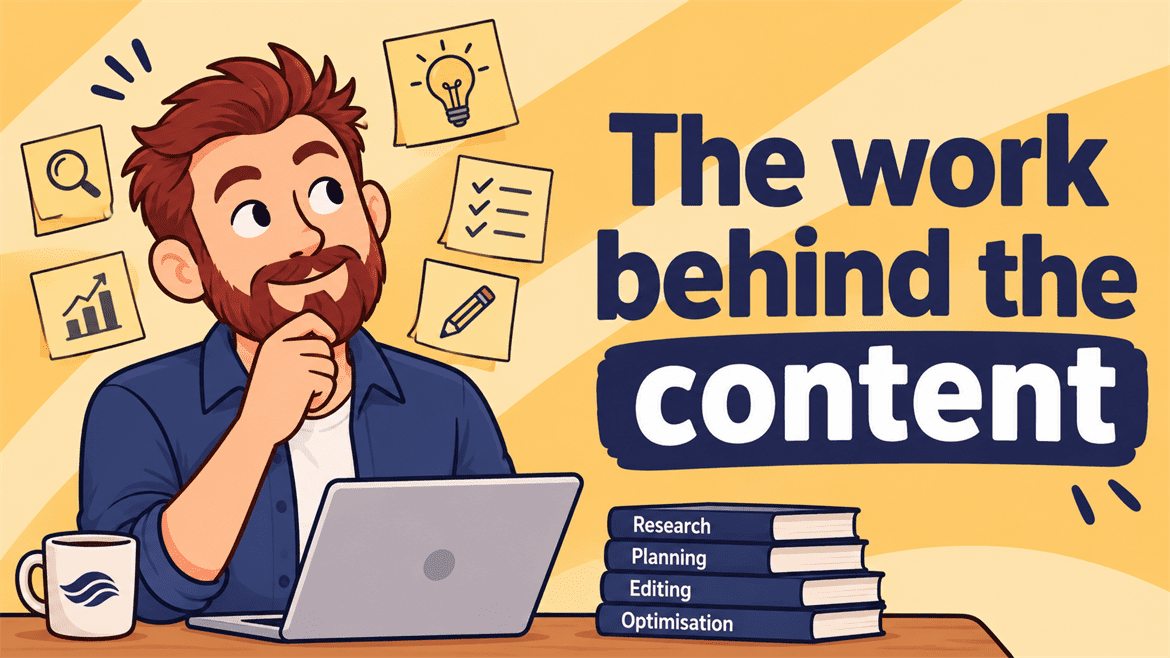
Most businesses understand the value of good content. They know they should be publishing useful blog posts, keeping their website up to date, sending emails and staying active on social media.
Achieving all that is easier said than done.
Someone needs to decide what to publish. Someone needs to write it, check it, approve it, format it and get it online.
Then there’s the job of keeping everything updated, making sure the next article doesn’t mysteriously disappear into someone’s inbox and remembering that the company newsletter was supposed to go out last Tuesday.
It’s a surprising amount of work, particularly when content is just one of the many things competing for your attention.
With AI making it easier to produce more content, there’s another consideration. More material still needs planning, checking, organising and managing.
A steady supply of first drafts doesn’t automatically translate into a useful content operation.
That’s where content management comes in.
What is content management?
Content management covers the work involved in planning, organising, creating, editing, publishing and maintaining content across your website and marketing channels.
It looks at the whole process rather than treating every blog post, email or website update as a separate job.
For a small business, that might mean working out which topics deserve attention, creating a realistic publishing schedule and making sure the website doesn’t become a collection of outdated pages and abandoned blog posts.
For a growing company with several writers or contributors, it could involve briefing people, reviewing their work, managing deadlines, maintaining editorial standards and making sure everything sounds as though it belongs to the same business.
It can also include the practical side of publishing, such as formatting articles in WordPress, adding images and links, updating web pages and preparing content for promotion.
The exact arrangement depends on what your business needs.
Some clients need someone to organise the whole operation. Others have a team in place and simply need an experienced person to manage the editorial side.
Either way, the aim is to make sure content is produced, published and maintained without everyone having to work out what happens next every time something needs doing.
Content management covers more than your website
When people think about managing content, they often picture a website or blog.
Those are important parts of the job, but most businesses have several different types of content to keep track of.
I can help manage and produce a range of formats, including:
- Web pages: Service pages, landing pages, product descriptions, about pages and other essential web content.
- Blog posts and articles: Regular articles, opinion pieces, guides and longer-form resources.
- Marketing emails: Newsletters, promotional campaigns, customer updates and automated email sequences.
- Social media content: Posts that support your wider marketing activity and give your website content another audience.
- Video scripts: Written scripts for promotional videos, explainers and other business content.
- Business resources: Case studies, downloadable guides, reports and other materials that demonstrate your expertise.
I can also work with content created using AI tools, helping to organise production, review drafts and make sure the finished material meets your standards.
I’m a trained copywriter and editor, which means I can offer more than coordination and administration.
I can write the content, edit work produced by other people, refine AI-assisted drafts and prepare everything for publication.
That makes a difference when a project needs someone to take responsibility for several stages of the process.
You don’t have to find one person to write the article, another to edit it and someone else to upload it to your website.
I bring those skills together, alongside the planning and management needed to keep the work moving.
Why content management matters to your business
I’ve seen plenty of content projects start with good intentions. Someone has an idea for a blog, a list of topics gets put together and there’s a burst of activity.
A few articles appear, perhaps a newsletter goes out, and then other business priorities take over.
A couple of months later, the blog hasn’t been updated, the email campaign is still sitting in draft and nobody is quite sure who was supposed to write the next article.
It’s rarely because the business has run out of things to say. More often, nobody has the time or responsibility to manage the process.
Good content management helps businesses get more from the time and money they invest in content.
It creates a clearer direction, keeps production organised and makes it easier to connect individual pieces of content to wider marketing activity.
Here are a couple of examples of how that might work.
Example 1: Getting a startup’s content off the ground
Imagine a startup launching a new service. The founders know their industry inside out, they’ve developed something they believe customers need and they’ve got a website ready to go.
The problem is that the website doesn’t yet explain the service particularly well. There’s very little supporting content, and the business has no established audience.
Publishing the occasional blog or LinkedIn post probably won’t solve that problem.
The business needs a joined-up approach that introduces the service, explains its value and gives potential customers useful reasons to pay attention.
This is where I’d start.
First, establish the content foundations
I’d look at the business, its audience, the service being offered and the questions potential customers are likely to ask.
That would help shape the messaging and identify the information the website needs.
The first priority would be a strong service page explaining what the business offers, who it’s for, how it works and why someone might choose it.
Next, create supporting content
I’d identify useful topics that connect to the service and address the problems, questions and concerns of the intended audience.
A blog article might explore a common challenge customers face, explain an important part of the process or answer a question that often comes up during sales conversations.
This gives the business something useful to share and creates another route for people to discover the website.
Then, build an email campaign
I’d develop a welcome email or short introductory sequence for people who sign up to receive updates.
This could introduce the business, share useful information and point readers towards relevant website content.
The emails would have a purpose beyond simply announcing that another blog post exists.
Finally, coordinate social promotion
The service page, blog article and email campaign would provide material for social media posts.
I’d prepare promotional content that highlights useful points, shares relevant insights and encourages people to visit the website.
The result is a connected collection of content rather than several unrelated marketing activities.
The business now has a service page explaining its offer, a blog article supporting that message, emails to develop relationships with interested readers and social content helping it reach a wider audience.
I’d also put a publishing schedule in place so the business knows what comes next and can keep building on that initial work.
AI could help with research, topic development, outlines and initial drafts along the way.
I’d still oversee the direction, check the material and make sure the finished content reflects the business accurately.
There’s little value in introducing a new company to the world with an article that sounds as though it could have been written about absolutely anyone.
Example 2: Helping a small business build an audience
Now imagine an established small business with a good reputation and plenty of happy customers.
It has a website, a social media presence and a mailing list, but its marketing activity is rather inconsistent.
The owner occasionally publishes a blog post, sends an email when there’s something to announce and shares updates on social media.
There’s useful knowledge within the business, but it isn’t being turned into content regularly.
I’d start by looking at what’s already there.
Review the existing content
I’d assess the website, blog, email activity and social content to see what’s working, what’s outdated and where there are gaps.
There might be service pages that need improving, older articles worth refreshing or useful customer questions that haven’t been addressed anywhere on the website.
Develop a realistic content plan
Rather than filling a calendar with topics simply because there’s an empty space, I’d identify subjects that support the business’s objectives and give its audience something useful.
That might mean publishing two well-researched blog articles each month, updating a key service page and sending a regular newsletter.
The schedule would reflect the resources available. A small business doesn’t need a publishing programme that requires the owner to spend every evening writing articles.
Connect the different marketing activities
Let’s say the business wants to promote a new service.
I’d review the existing service page and update it with clear information about the offer. I’d then brief or create a blog article exploring a related customer problem, with a natural link to the service.
An email could introduce the new service to existing subscribers, perhaps linking to the article for readers who want more information.
Social posts would highlight useful points from the article and give the service additional exposure.
The same campaign could provide several weeks of marketing content with each piece serving a slightly different purpose.
Keep the programme moving
I’d coordinate the next articles, manage deadlines, review content, prepare everything for publication and keep the schedule up to date.
I’d also look at performance information where available. If certain articles attract more interest, generate enquiries or answer questions that repeatedly come up with customers, that information can help shape future content.
AI might help speed up research, suggest ways to repurpose an article or produce an initial version of a social post.
I’d review those outputs and adapt them to suit the audience and the campaign.
Over time, the business builds a useful collection of content that supports its marketing, while the owner gets more time to concentrate on running the company.
Does AI make content management easier?
In some ways, yes. AI tools can help with research, topic ideas, outlines, first drafts, summaries and adapting existing material for different channels.
They can also help a small team produce more without having to start every task from a blank page.
I’ve worked with content long before AI tools became part of everyday production and I’ve spent time learning how to incorporate them.
That experience gives me a useful perspective on where they can help and where human oversight still matters.
For example, AI can produce a draft article based on a brief, but someone still needs to check whether the information is accurate, whether the article answers the right question and whether it sounds like the business that will publish it.
It also needs to fit into the wider content plan.
There’s little point generating ten articles if they repeat the same information, cover subjects nobody is interested in or have no connection to the services the business offers.
The same applies to social posts and emails.
AI can help adapt an article into different formats, but the finished material still needs to make sense for the channel and the people reading it.
I use AI where it adds value, whether that’s helping with research, developing ideas, supporting production or making certain tasks more efficient.
I also bring the writing, editing and management experience to guide the process and check the results.
For businesses, that means AI can become a useful part of content production without leaving the entire operation to a collection of automated drafts.
A little experience goes a long way
Content management might sound like a fairly recent specialism, particularly now that AI has changed the way many businesses approach content production.
The underlying work, though, has been around for a long time.
I’ve spent more than 20 years working with digital content, writing, editing and publishing.
I’ve been a writer, proofreader, copy editor, content editor and managing editor, as well as managing and training writers and helping teams establish better ways of working.
I’ve worked with international brands, smaller businesses and organisations with very different content requirements.
I’ve also spent plenty of time working with WordPress, managing websites and getting content ready for publication.
That background matters because content management involves understanding the whole process.
You need to know what makes a good brief, how to get the best from a writer, what needs attention during editing and what can go wrong between an approved draft and a published article.
AI has added new tools to the process, and I enjoy working out how to use them effectively.
But the foundations of good content management remain familiar, clear direction, sound organisation, editorial judgement and people who know what they’re doing.
How does freelance content management work?
There’s no single arrangement that suits every business. Some clients need a few hours of support each month, while others want someone to take responsibility for a much larger content programme.
The first step is a conversation about what you’re producing, what’s currently happening and where you need help.
From there, we can agree on the right level of support.
1. Review your current content operation
I’ll look at your website, existing content, publishing activity and any processes you already have in place.
If you work with writers or other contributors, I’ll also want to understand how that collaboration currently works.
This helps identify what’s going well, where things are getting stuck and what needs attention.
2. Agree on priorities and responsibilities
We’ll establish what you want to achieve and which tasks you’d like me to handle.
That might include content planning, writing briefs, coordinating contributors, editing submissions, managing the publishing schedule or looking after WordPress content.
If you need a more structured approach, I can help develop editorial guidelines, templates and workflows.
3. Put the plan into action
Once we’ve agreed on the scope, I’ll get to work.
Depending on the arrangement, I can create content, edit material produced by your team, coordinate writers, prepare articles for publication and manage the content.
I can also help incorporate AI tools into the process where they make sense, with appropriate editorial checks along the way.
4. Keep everything moving
For ongoing projects, I’ll manage the agreed activities, keep you informed and review priorities as your requirements change.
You might need more support during a product launch, a busy marketing period or a website refresh. The arrangement can be adjusted to reflect the work involved.
You don’t need to have every detail worked out before getting in touch. Part of my job is helping you work out what needs managing and how to approach it.
Your content needs someone looking after the bigger picture
It’s easy to concentrate on the next article, the next email or the next social post. Those individual pieces matter, but they work much harder when someone is looking at how they fit together.
Content management gives your business a way to plan its activity, organise production, maintain standards and make better use of the content it creates.
It can also take a considerable amount of work off your plate.
Instead of trying to fit content around everything else, you have someone who understands the process and can take responsibility for keeping it moving.
I offer flexible content management support for startups and small and medium-sized businesses, from occasional help with publishing to ongoing editorial and content management.
If your content operation needs a bit more structure, or you’d simply like someone experienced to take some work off your hands, let’s talk about your content management requirements.
Five questions businesses often ask about freelance content management
1. Do I need to have an existing content team?
No. I can work with businesses that already have writers and contributors, as well as those starting from scratch.
If you have a team, I can help coordinate the work, provide editorial direction and maintain quality standards. If you don’t, I can help plan and create the content as well as manage the publishing process.
2. Can you write and edit the content as well as manage it?
Yes. I’m a trained copywriter and editor, so I can take care of content creation, editing and preparation for publication.
I can also manage work produced by your existing team or other freelancers. The scope depends on what you need and how much of the process you’d like me to handle.
3. Can you manage our WordPress website?
Yes. I have extensive WordPress experience and can help with the content-related side of your website.
That includes uploading and formatting articles, updating pages, adding images and links, preparing content for publication and keeping content organised.
This service focuses on content and publishing rather than technical development or website hosting.
4. How much involvement will I need to have?
That depends on the arrangement. I’ll need your input at the beginning so I understand your business, audience, priorities and expectations.
After that, we can agree on how approvals and communication will work. Some clients prefer to review every piece of content before publication, while others are happy to delegate more once the process and editorial standards are established.
You’ll remain involved in the decisions that matter to your business, without having to coordinate every individual task.
5. Can you help us use AI in our content production?
Yes. I can help identify where AI tools could assist with research, planning, drafting and adapting content for different channels.
I can also help establish practical workflows and editorial guidelines, review AI-assisted material and make sure the finished content meets your requirements.
My approach is to use AI where it makes the process more efficient while keeping accuracy, quality and your brand voice in view.

 Nov 19, 2026

