AI content isn’t bad because AI wrote it
When people say AI content is bad, they’re usually diagnosing the wrong patient.
“It sounds robotic.” Sure, sometimes. “It’s full of errors.” Yes, that happens. “It’s soulless.” Okay, fair, but also a bit much.
These are symptoms, not the disease.
The actual problem with AI content, the one sitting in the corner wearing a high-vis vest and waving a clipboard, is much more specific.
AI content is bad because it rarely contains a single original thought.
Not because a machine wrote it. Because the machine was given nothing interesting to work with and was then asked to produce something interesting.
Which is a bit like handing someone an empty bowl and asking them to serve soup.
The real problem with “write me a blog post about X”
When you ask an AI to write about, say, project management tools, it will produce something competent, structured and almost entirely content-free.
It’ll define what project management is (thanks), list some features to look for (helpful), and tell you that “every business is different” (profound).
It will not, under any circumstances, tell you something you didn’t already know.
That’s not because the AI is broken. It’s because it’s doing exactly what it was designed to do: synthesise existing information into readable prose.
You asked it to pour from the collective jug of human knowledge. It poured.
The jug was already full of the same stuff everyone else has already written, so that’s what came out.
There’s a framework I’ve been using with clients that captures this problem.
I call it GIGO, which stands for Garbage In, Garbage Out, and which I am fully aware has existed since the 1960s, but which has never been more relevant than it is right now.
What “original” actually means in content
Original doesn’t mean made up. It means having a genuine point of view.
It means you’ve thought about a topic long enough to have an opinion that isn’t “it depends.”
It means your experience, your clients’ patterns, your specific corner of whatever industry you work in, is baked into what you’re saying.
The reader comes away having genuinely learned something, not just had existing information rearranged in front of them.
A good post about project management tools doesn’t describe features. It tells you why half the features nobody uses, based on watching actual humans interact with actual software.
It tells you about the specific type of person who thrives in Notion and the specific type of person who will, within six weeks, abandon it for a notebook.
That’s an opinion. Opinions require a brain that has lived in the world.
AI hasn’t lived in the world. It’s read everything written by people who have, and it can reconstruct the shape of that experience very convincingly.
But reconstruction isn’t the same as the real thing, and readers know the difference, even if they can’t articulate why.
So what’s AI actually for, then?
This is where I’d gently push back against the “AI is destroying content” crowd, because it’s not quite right either.
AI is an extraordinary drafting, structuring, and editing tool. It’s the thing that takes your half-formed, coffee-fuelled voice note about why B2B sales processes are fundamentally broken and turns it into something a reader can follow without a map.
It’s the thing that expands your three-bullet outline into 1,500 words that retain the shape of what you were actually trying to say.
It’s not the thing that had the insight in the first place. You did. Your experience did. The client who called you last Tuesday and said something that made you go “oh, that’s actually a really interesting problem” did.
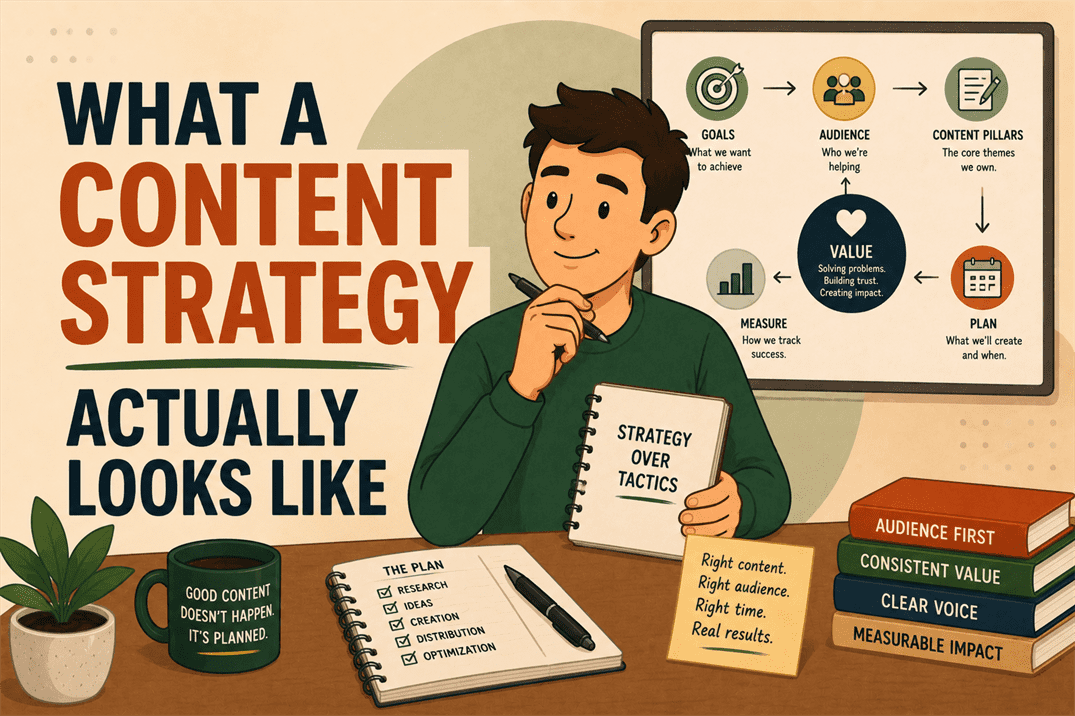
The content pipeline most businesses are running right now looks like this: prompt AI, publish AI output, wonder why engagement is low.
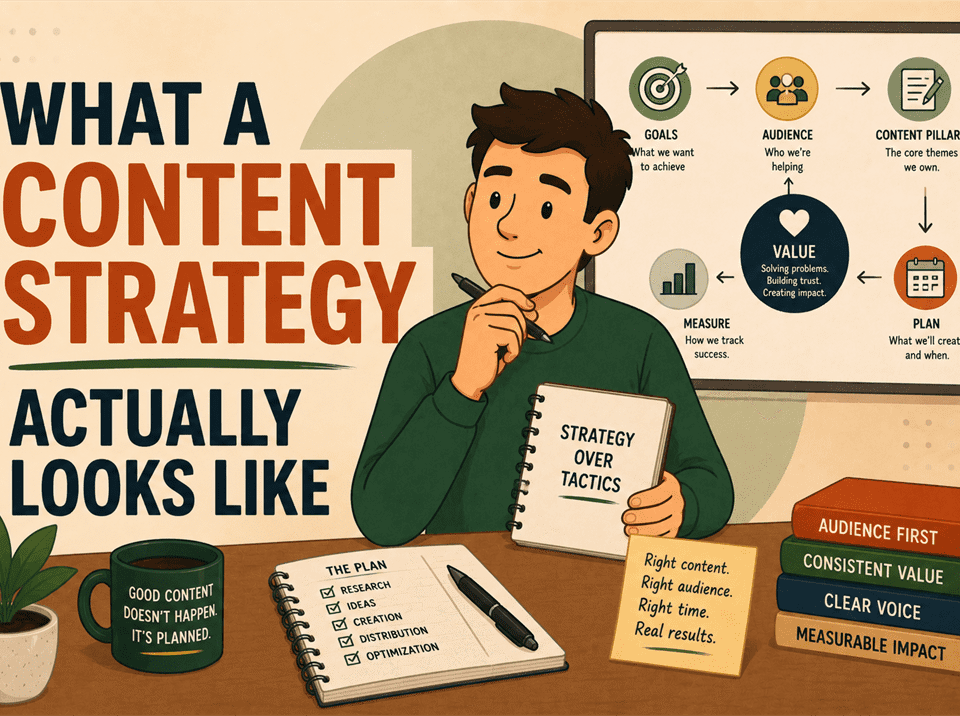
The pipeline that works looks like this: have a view, shape that view into a structure, use AI to draft and refine, edit for voice and accuracy, publish.
One of those processes treats AI as the source. The other treats it as a very fast, very capable collaborator who needs you to have already done the thinking.
The irony that nobody wants to talk about
The businesses screaming loudest about AI killing content quality are often the same ones who were publishing generic, viewpoint-free content long before AI existed.
The 2018 version of “10 tips to improve your email marketing open rates” was also not particularly illuminating. It just took longer to produce and cost more.
AI hasn’t introduced the problem of empty content. It’s made the problem visible, cheap and scalable.
If your content strategy is “cover the same topics as everyone else, but be slightly more thorough,” AI hasn’t changed your situation.
You were already at the back of the queue. You just had a slower conveyor belt.
What this means for your content
The bar for good content has always been the same. Say something that your reader couldn’t have found in thirty seconds elsewhere.
The reason AI has made this suddenly urgent is that “everywhere else” now includes every other AI-generated post on the same topic, written by every other business that ran the same prompt.
The content that cuts through now is the content that contains something a language model can’t fabricate, genuine perspective, lived experience and a willingness to take a position.
That’s actually not a bad thing for the writers and strategists who’ve always believed in that approach.
It just means you don’t have a lot of time to keep pretending otherwise.
If your current strategy is hoping nobody notices, we should probably talk.