Welcome to the web: Please accept cookies and watch this ad
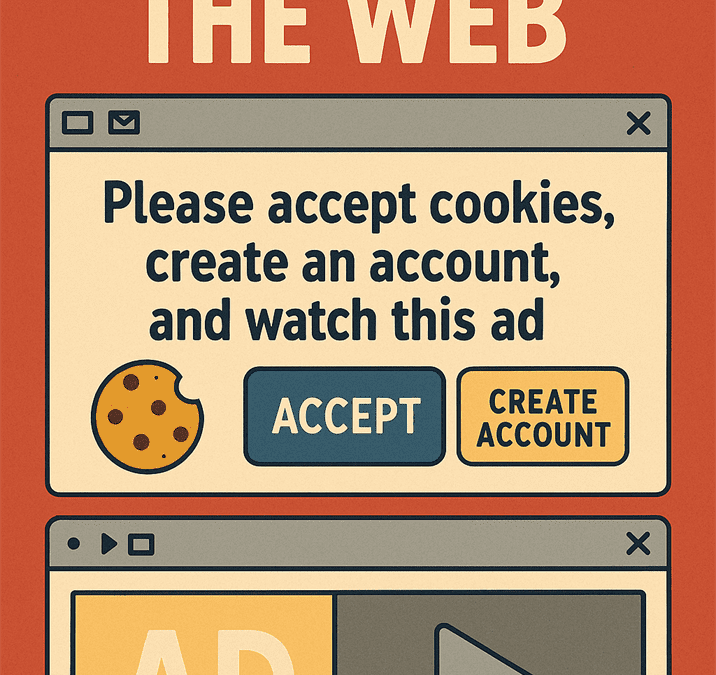
Ah, the world wide web. Remember when it was a magical place full of pixelated dancing hamsters, Geocities pages with unreadable fonts and exactly one banner ad offering you a chance to “punch the monkey for prizes”?
Simpler times.
Now?
The modern web feels like an obstacle course designed by someone who really hates you but also desperately wants your email address.
Let’s walk through the worst offenders together. Bring snacks.
Popups: The uninvited dinner guests of the web
Popups are the digital equivalent of someone barging into your living room during dinner and shouting, “Have you considered refinancing your mortgage?”
Every site does it. News websites, shopping sites, that one blog you clicked because it promised a sourdough recipe but delivered a memoir about Karen’s life-changing gap year in 2008.
Before you’ve even read the headline, a giant box has elbowed its way across your screen to say:
“Hey there! Want to sign up for our newsletter? We promise we’ll only send you 17 emails a week about things you don’t need!”
I came here for banana bread, not a long-term relationship.
And the “X” button?
Always microscopic. Sometimes it’s grey-on-grey camouflage. Occasionally, it doesn’t exist at all, forcing you into what I call the Subscription Standoff: you versus an overlay, both refusing to back down.
Exit-intent popups: The guilt tripping cousins
Just when you think you’ve escaped, the site detects your mouse heading toward the tab bar and swoops in like a needy ex.
“Oh, you’re leaving? But wait! If you go now, you’ll miss out on a once-in-a-lifetime 5% discount on artisanal doormats!”
It’s manipulative. The site acts like you’re abandoning a crying child in the supermarket when all you wanted to do was check the weather.
And the guilt!
Exit-intent popups don’t just offer deals, they shame you for saying no. “No thanks, I prefer paying full price like a fool.”
Excuse me? I didn’t know my self-worth was up for debate!
If exit-intent popups were people, they’d be the ones who wave dramatically as you’re leaving a party and shout, “Oh, I guess you don’t want to hang out with us cool kids anymore!”
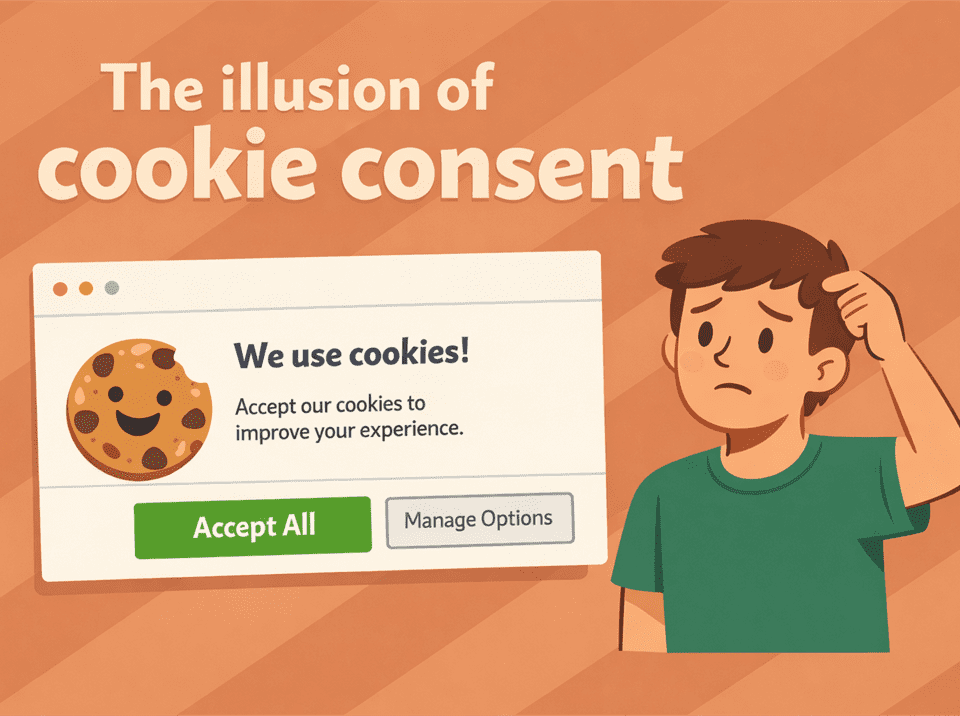
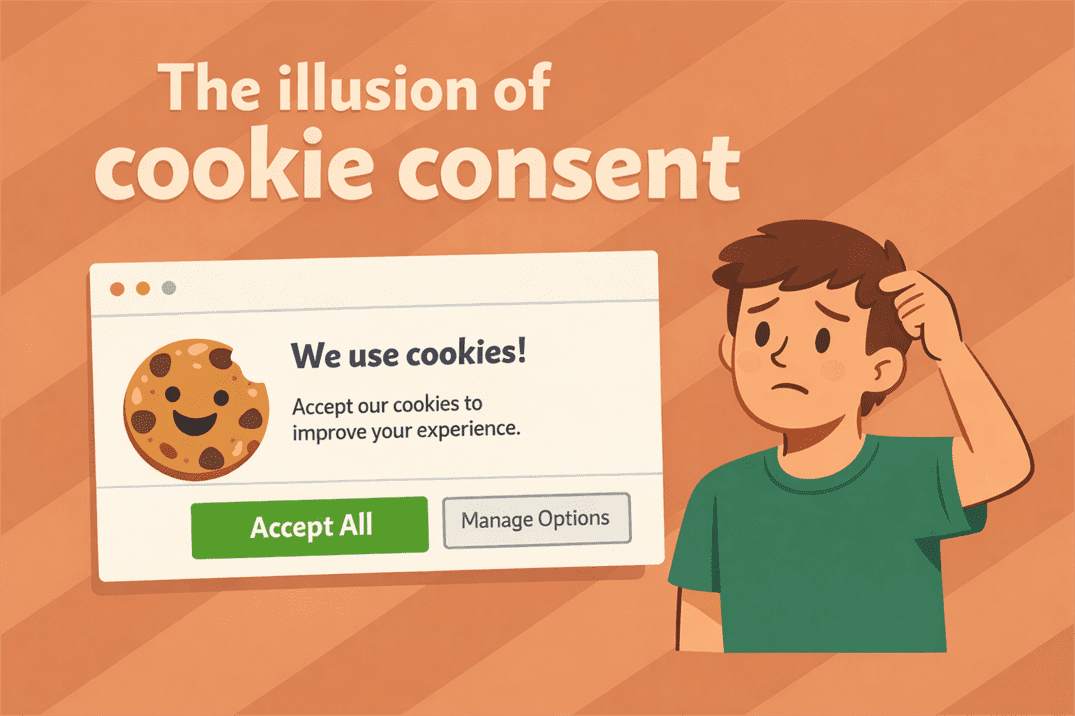
Cookie consent: The world’s least appetising biscuit
I like cookies. The baked kind. The internet kind? Less so.
Cookie banners are the new “Hi, have you got a moment to talk about your car’s extended warranty?”, inescapable and weirdly persistent.
The worst part? The options.
Do you want “essential cookies,” “performance cookies,” “functional cookies,” “advertising cookies,” or “cookies that may or may not summon an ancient marketing demon if accepted after midnight”?
And yes, you can hit “Manage Preferences,” but then you’re faced with a 14-tab labyrinth of toggles that look like they were designed by NASA.
You end up thinking, “Maybe I do want personalised advertising just to escape this form.”
There’s a reason everyone just slams “Accept All” like it’s the big red button in an action movie.
The account requirement: Hostage negotiations in disguise
I’m old-fashioned. I believe I should be able to buy socks without needing to join a digital brotherhood.
But no, every site wants me to create an account. Password must be 12 characters long, include one hieroglyph, two blood sacrifices, and a haiku about your favourite fruit.
Then you must verify your email.
Then confirm your phone number.
Then verify that phone number via SMS code that, naturally, expires before you’ve even opened the message.
By the time you’re done, you no longer want socks. You want vengeance.
And let’s not forget, you already had an account with this site, but you forgot the password, reset it, chose a new one, only to be told: “You can’t use a password you’ve used before.”
Which is rich, considering you have the memory capacity of a boiled potato at this point.
Paywalls: Velvet ropes, but less fun
Look, I’m not against paying for good content. Writers, journalists, creators, we all deserve money, preferably the kind with Queen Elizabeth’s face still on it because the Charles notes are, frankly, unsettling.
But the way some paywalls work? Brutal.
“You’ve read your three free articles this month. To continue, please subscribe for only £7.99 per week.”
Per week?! That’s Netflix money. That’s “nice sandwich with crisps and a drink” money.
The worst are “soft” paywalls. They let you read the first two paragraphs before cutting you off mid-sentence, usually right as the crucial bit appears.
“The secret to lowering your energy bills is…” BOOM. Subscribe. You’ll never know. Enjoy your expensive heating, sucker.
Ads: The final boss of browsing
Ads used to be manageable. A banner here, a sidebar there. Now it’s like opening a website is an invitation to a rave hosted by Google Ads and a pharmaceutical company.
You start scrolling and suddenly the page lurches down like it’s been hit by an earthquake because an ad loaded late.
Videos autoplay. Products you whispered about near your phone three weeks ago haunt you like capitalist ghosts.
And don’t get me started on those “native ads” disguised as articles. “Is this a review of toothpaste or is Colgate literally paying this writer’s rent?”
Both. Always both.
I once tried to read a recipe and the instructions were spread across six pages, each one lovingly wrapped in an ad for car insurance.
Step one: whisk flour. Step two: consider GAP for your new Kia.
Autoplay videos: The unskippable jump scare
And then, the crown jewel of chaos, autoplay videos.
You know the scene. You’re quietly reading an article about gardening when suddenly your speakers explode with the dulcet tones of a man yelling about crypto.
You scramble to pause it, but of course, the pause button is hidden beneath three overlapping ads and a floating “Subscribe Now!” banner.
Autoplay videos are the digital equivalent of someone sneaking up behind you and blasting an air horn.
They serve no purpose other than to spike your blood pressure and remind you that free websites are never truly free.
Also, have you noticed they never match the article?
You’re reading about “10 ways to calm anxiety” while a video starts screaming about a UFC fight.
That’s not calming. That’s irony with a body slam.
Muted autoplay, almost better but that someone sneaking up on you is a mime without an air horn.
The semi-serious point buried under all this sarcasm
Here’s the truth: I love the internet. It’s my second home (first, if we’re being honest with my electricity bill).
But the modern web is exhausting.
Every visit feels like running a gauntlet of digital irritations, each one carefully designed to squeeze money, data, or sanity out of us.
Websites need to earn revenue, sure. But maybe they don’t need to do it by staging a Broadway production of popups, banners, and unsolicited videos every time we scroll.
Treat visitors like humans.
Let us breathe. Maybe let us buy socks without founding an account-based sock monarchy.
So next time you’re drowning in cookie banners while a video about car insurance screams from the corner of your screen, remember this, you are not alone.
We’re all in this absurd internet circus together.