The illusion of cookie consent
I’ve been staring at a blank document for twenty minutes, which means it’s time to write about cookie consent banners.
This is how my brain works. I procrastinate by choosing a topic that makes me feel productive while quietly judging the internet.
You already know the banner. You can’t not know it.
You click a link expecting an article, a recipe, or a quick answer, and instead you’re greeted by a polite rectangle that slides in like it owns the place.
“We value your privacy.”
A bold opening line from something that appeared without knocking.
The noble idea that started it all
Let me pause here and be fair, because I don’t want to turn into that person yelling at clouds.
Privacy laws exist for a good reason. They were designed to give people control, transparency, dignity.
Somewhere in a well-lit meeting room in the EU government building, someone genuinely said, “We should protect users.”
I believe that happened. I choose to believe that happened.
On paper, cookie consent is about choice. Real choice. Informed choice. The kind of choice that makes everyone feel responsible and adult.
Then we meet the buttons.
Accept all, the chosen one
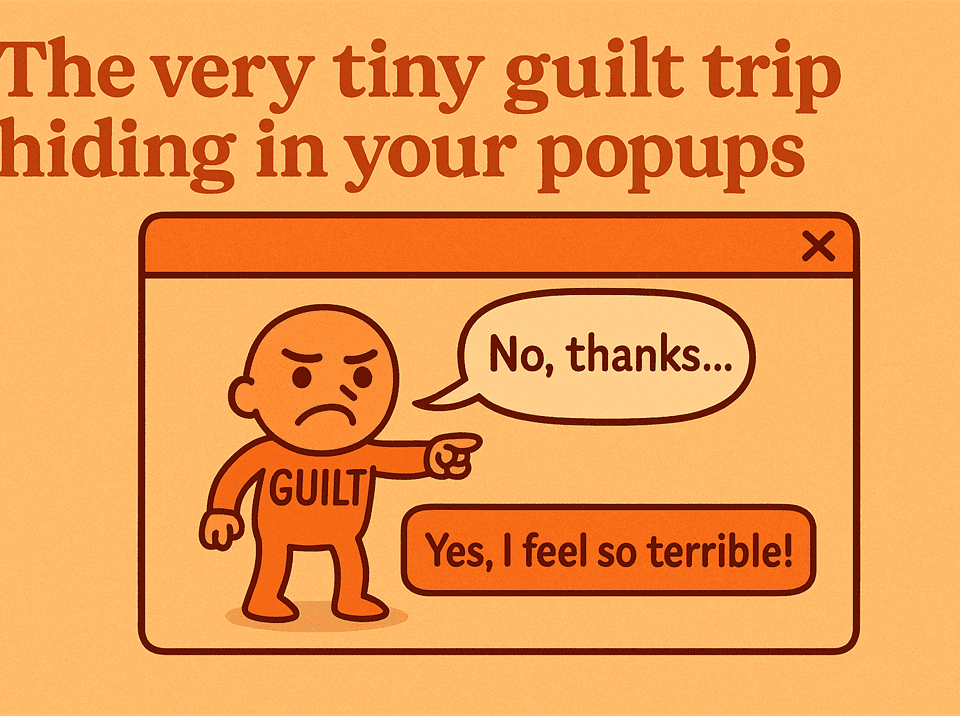
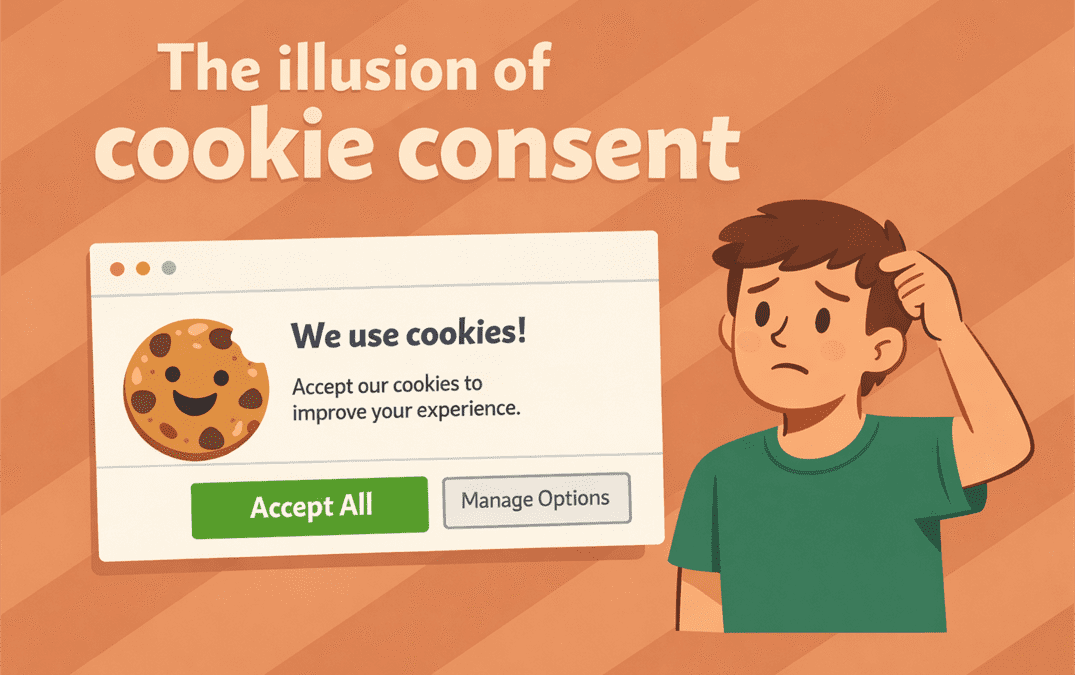
Accept All is massive. Bright. Friendly. It’s confident. It wants the best for you. One click and you’re through the door, free to read the thing you came for.
Reject All, meanwhile, has gone on a personal growth journey.
You won’t find it straight away. It’s behind “Manage Preferences.” Then another screen. Then a scroll. Then a list of toggles labelled with phrases like “Legitimate Interest” and “Vendor Flexibility,” which sound less like user options and more like rejected prog-rock albums.
You can absolutely say no. You just have to really want it.
This is where compliance theatre enters the chat.
Everything is technically allowed. The rules are followed. The boxes are ticked. Somewhere, a regulator nods approvingly.
Meanwhile, you’re just trying to read one paragraph before your tea goes cold.
The consent obstacle course
I’m rewriting this section for the third time because I don’t want to sound angry. This isn’t anger. It’s confusion with a side of mild disbelief.
The banner says, “Make a choice.” But the page underneath is held hostage until you comply.
Read the article, or manage seventeen toggles. Your move.
Privacy becomes a toll booth.
You can pay with data or you can pay with time. Neither feels like a free choice when you’re on a lunch break and just wanted a quick answer to a simple question.
And yes, I know exactly why it’s done this way. Friction works. One click beats five. People avoid effort.
I’ve worked in content long enough to know that if something takes longer, fewer people will do it.
This isn’t a conspiracy. It’s behavioural maths wearing a friendly cardigan.
Why people are actually annoyed
Here’s the bit that matters and I’m talking directly to you now because you’ve felt this.
The frustration isn’t really about cookies. It’s about being rushed.
You didn’t arrive on a website ready to negotiate terms. You arrived to read something.
Instead, you’re asked to make a decision you didn’t plan for, under mild pressure, with your reward being access to the page you already clicked.
That repeated experience adds up. Not in a dramatic way. In a slow, eye-roll, muscle-memory way.
Click Accept. Move on. Don’t think about it.
Which is ironic, because the entire system exists to make you think about it.
When good systems get weird
This is the part where I think about writers like George Orwell, Douglas Adams, or the calmer essays of David Foster Wallace.
They all had a knack for pointing out how sensible systems become strange once they meet reality.
Cookie consent feels like that.
A framework built to empower users that accidentally trained millions of people to click “Accept All” without reading anything.
We didn’t become careless. We became tired.
And yes, before you say it, I know the irony. This blog post has its own cookie banner. I’ve already had that internal argument believe me!
What consent should actually feel like
At this point in the writing process, I usually add a neat conclusion. Three tidy takeaways. A button. A call to action.
I’m not doing that.
This topic doesn’t need fixing in a paragraph. It needs noticing.
Real consent isn’t just about having options. It’s about how those options are presented.
If refusing feels like work and accepting feels like relief, the choice has already been made for you.
That doesn’t make anyone evil. It makes the outcome predictable.
A softer landing
Privacy laws were meant to protect people, and they still can.
But if we want consent to mean something, it has to be as easy to refuse as it is to accept.
Same effort. Same visibility. Same respect for the fact that people came to read a page, not negotiate a contract.
If you’ve read this far without clicking “Accept All” somewhere else, I salute you.
If you didn’t, that’s fine too. That’s the illusion.
Want writing that respects the reader?
If cookie banners have taught us anything, it’s that people notice when they’re being nudged instead of respected.
That’s how I approach writing and editing too. Clear intent. Honest structure.
No hidden tricks, no filler, no friction designed to push readers into doing something they didn’t mean to do.
If you want content that feels human, reads cleanly, and doesn’t make your audience work harder than they need to, that’s literally my job.
You can take a look at my writing and editing services here.