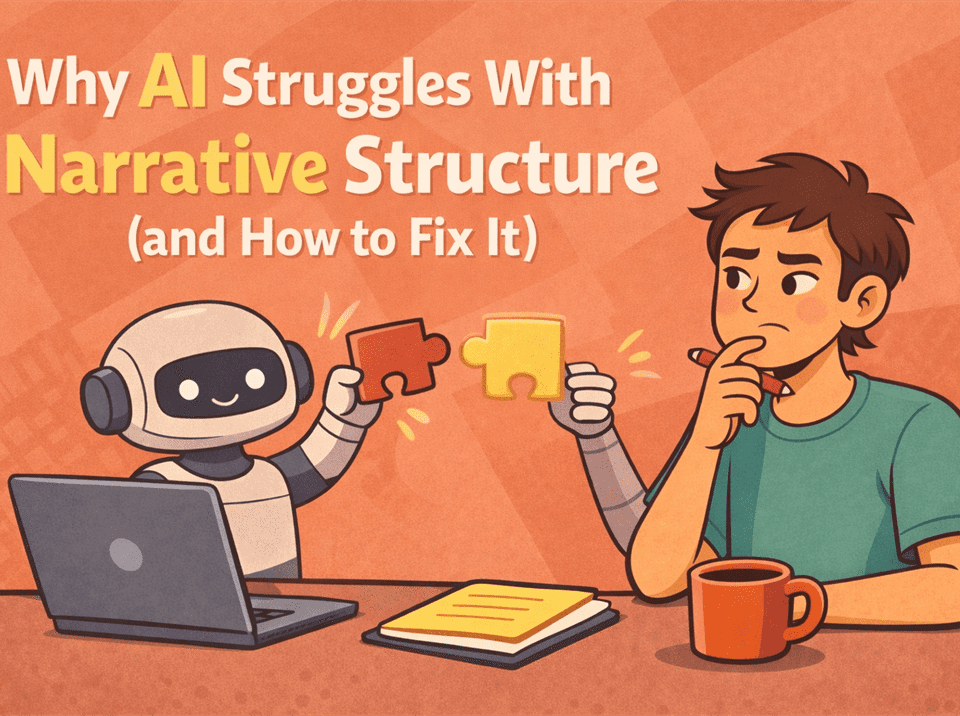
The great content flood: How AI is changing what ranks on Google
Remember when creating content used to mean writing it yourself?
Now, thanks to the rise of AI tools, the internet has entered its “everything everywhere all at once” phase.
Thousands of blog posts appear every minute. Some of them are helpful. Some of them read like IKEA instructions translated twice.
And somehow, they’re all trying to rank for the same five keywords.
So what happens when everyone’s using the same robot to write their “unique” content?
AI slop mostly. But also, a fascinating shift in how Google decides what deserves to rank.
Let’s talk about what’s happening to SEO when AI starts pumping out more content than humans can possibly read and why shouting “quality over quantity” has never mattered more.
SERP changes with mass AI content production
Google’s search results (SERPs, if we’re being fancy) used to feel like a meritocracy. Write good stuff, earn backlinks, stay updated and you’d eventually climb the ranks.
Now? It’s like a reality show where contestants are all clones of each other, competing to see whose title tag is slightly less robotic.
AI content isn’t inherently bad, some of it is brilliant, but the sheer volume is drowning everything else out.
Millions of new pages go live daily, each politely repeating the same advice: “Start with a plan, create great content and engage your audience.”
Google’s algorithms are trying to keep up, but it’s like asking a lifeguard to stop a tsunami with a pool noodle.
The result is unpredictable SERPs where AI-written pages can outrank experts one week, then disappear entirely the next.
In other words, it’s the Wild West again, but this time the cowboys are language models.
How E-E-A-T signals are evolving
If you’ve been around SEO circles, you’ve probably heard the term E-E-A-T so often you could recite it in your sleep: Experience, Expertise, Authoritativeness and Trustworthiness.
It’s Google’s way of saying, “We want real humans who know things.”
Which is charming, except the internet is now full of very convincing robots who pretend to know things.
So Google’s caught in an awkward spot, trying to measure “experience” in a world where the writer might be a chatbot trained on Wikipedia.
You can almost hear the algorithm sigh.
Expect to see signals shift toward verifiable expertise, actual names, credentials and track records that prove someone exists.
Think fewer “anonymous editors” and more visible bylines, author bios and consistent topical footprints across the web.
In short, Google’s getting smarter about rewarding the humans behind the curtain.
And if you are human, this is your time to shine.
The rise of topical authority over volume
For years, SEOs chased volume, publish more, rank more, repeat until burnout. It worked, for a while.
But now, with AI capable of spitting out 500 articles before breakfast, Google’s shifting its focus from how much you write to how much you actually know.
Enter topical authority. The idea that depth beats breadth.
A site that covers one topic deeply will usually outperform a site that covers everything superficially.
Google’s starting to look for patterns of expertise, consistent, coherent content ecosystems that signal genuine understanding rather than mass production.
That means quality context wins. Relevance wins. Personality wins. And yes, actual humans still win, at least for now.
Case studies: AI content ranking successes and failures
Let’s talk outcomes. AI content isn’t a guaranteed disaster, it’s more like a chaotic trainee, occasionally brilliant, often confused and entirely dependent on supervision.
Here are two examples I have first-hand experience of:
Case 1: The AI success story
A small tech blog used AI to draft explainers on emerging software tools. The human editor (me) fact-checked, added insights and tailored tone for their niche audience.
The result? Rankings shot up within weeks. Google seemed to appreciate the mix of structured clarity and human context.
Case 2: The AI disaster
A marketing agency decided to automate everything and fire their human writer/editor (also me).
300 articles in one month. Topics ranged from “how to write a press release” to “how to change a bike tyre.” Traffic spiked briefly, then cratered.
Why? Thin content, repeated phrasing and the unmistakable scent of “no one cared enough to edit this.”
The takeaway? AI isn’t the villain. Laziness is.
AI can supercharge your content strategy, but it can’t replace taste, editing, or actual thought.
AI tools are impressive but so were the dinosaurs and look how that turned out.
The content flood
The content flood is real and it’s not slowing down.
The question isn’t whether AI will change SEO. It already has. The question is how we’ll adapt without losing the things that made content worth reading in the first place.
For my part, I’ll keep doing what’s worked since the beginning. Write for humans, offer real value and let Google sort itself out.
Because whether it’s AI or some new search overhaul next year, authenticity still cuts through the noise. Always has. Always will.
If that’s how you want to survive the AI-pocalypse, I can help.