Consent or pay: A masterclass in how to annoy everyone at once
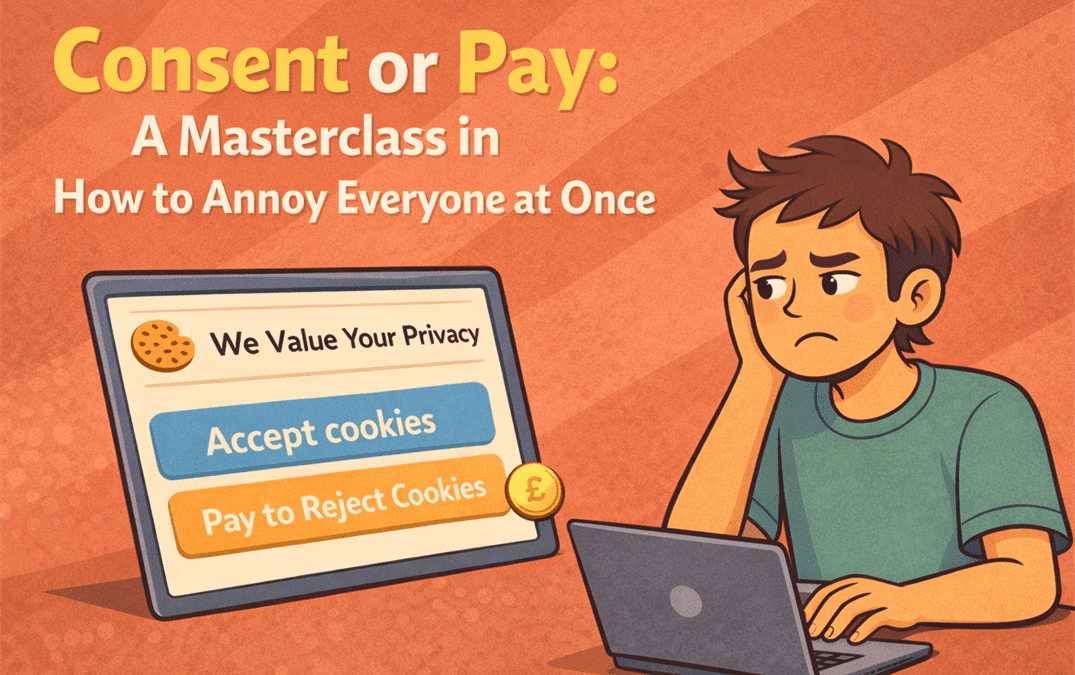
There’s a new popup doing the rounds.
You open a website. You’re ready to read one article. Maybe two if you’re feeling reckless. Instead, you’re greeted with a polite threat.
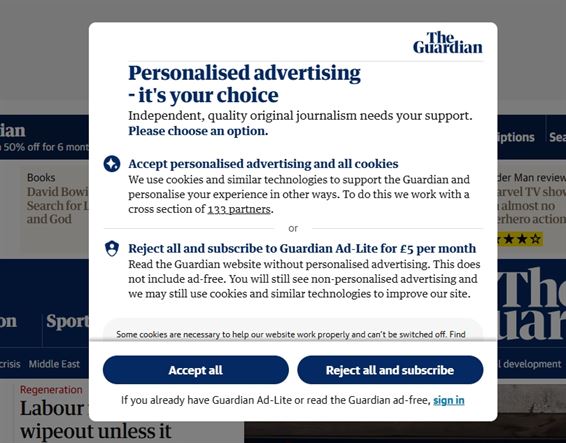
“Accept cookies or pay.”
Not pay for the content. Not pay for value. Pay to avoid being tracked.
Welcome to the consent or pay model, where user choice is technically present and spiritually absent.
Let’s be honest about what’s happening
This is not about empowerment. It’s not about transparency. It’s not even about sustainability, despite how earnestly it’s framed.
It’s about turning irritation into revenue.
The model works like this. You can either hand over your data, attention, behavioural signals, browsing habits, future preferences and a vague sense of dignity.
Or you can hand over money so the site will graciously agree not to spy on you.
Choice is doing a lot of work in that sentence.
This isn’t consent. It’s coercion with better typography
Consent implies a decision made freely. This is a shakedown with branding.
The message to users is clear. Your privacy has a price tag now.
If you don’t want to be tracked across the internet like a confused pigeon, that’ll be £4.99 a month please.
And if you don’t want to pay, well, you clearly don’t mind being surveilled.
It’s a neat trick. Take something people never wanted to begin with, make it unavoidable, then charge them to opt out.
The quiet class divide nobody wants to talk about
Consent or pay quietly creates two types of users.
People who can afford privacy and people who can’t.
If you have disposable income, congratulations. You get a calmer internet experience. Fewer trackers. Less data extraction. A sense of control.
If you don’t, your data becomes the currency.
This turns privacy into a premium feature. And once that happens, the rest of the conversation becomes performative.
Because we all know which option most people will choose when faced with a popup that blocks the content until you comply.
Users don’t feel respected. They feel punished
From the consumer side, this model feels petty.
As if popups weren’t bad enough, or having to click multiple times before getting to the content wasn’t bad enough.
It doesn’t say, “We value your choice.” It says, “We noticed you hesitated.”
The tone is usually faux-friendly. Lots of soft colours. Rounded corners. Carefully worded explanations about how difficult it is to run a website these days.
And then the ultimatum.
Pay us, or let us watch you.
That doesn’t build trust.
Nobody thinks this improves the experience
No user has ever closed a consent or pay modal and thought, “That felt fair.”
They think:
- Why am I being charged for not being tracked?
- Why is this my problem?
- Why does every site think it deserves a subscription?
This isn’t a premium experience. It’s a friction tax.
People don’t leave because they hate paying. They leave because they resent being blackmailed.
It trains users to disengage, not support
Publishers adopting this model often talk about valuing direct relationships with readers. Reducing reliance on advertising. Building sustainable revenue.
Then the first interaction a reader has is a threat.
That doesn’t encourage loyalty. It encourages avoidance.
Users open fewer articles. They bounce faster. They associate the brand with hassle.
Some will pay, yes. Most will leave and not come back.
That’s not a relationship and is never likely to become one.
The internet didn’t need another toll booth
People already juggle subscriptions for news, music, video, software, storage and the occasional app they forgot to cancel.
Now we’re asking them to subscribe to individual websites just to browse without being followed around the internet for the rest of the day.
It’s a monetisation reflex dressed up as ethics and it’s fooling nobody.
There is a difference between asking and demanding
In my experience, internet users are surprisingly reasonable.
They’ll accept ads. They’ll tolerate light tracking. They’ll even support sites they trust if the value is clear and the request feels human.
What they won’t tolerate is being strong-armed.
Consent or pay removes goodwill from the equation. It replaces it with pressure and a countdown clock.
Once that happens, the relationship is already damaged.
The lasting impact is subtle but real
Most users won’t articulate why they dislike these sites. They won’t cite principles. They won’t reference regulations.
They’ll just feel annoyed.
And annoyance is cumulative.
Enough small irritations and a brand becomes avoidable by instinct. You skip links. You close tabs. You stop clicking without really knowing why.
That’s the cost nobody is calculating yet.
A choice that doesn’t feel like a choice
On paper, consent or pay looks clever. In practice, it tells users exactly where they stand.
Your comfort is optional. Your data is valuable. Your presence is conditional.
Pay up or give in.
That’s not consent. It’s compliance theatre and users can tell.
How many websites do you no longer visit because you felt more of a commodity than a reader?