AI didn’t kill writing. It exposed weak writers
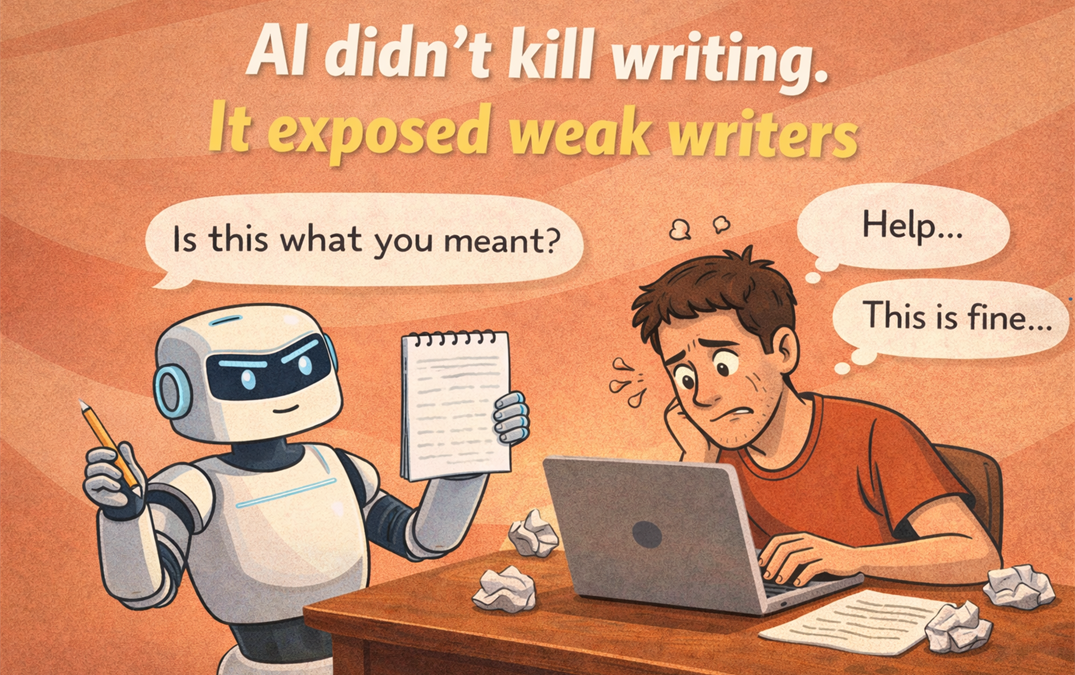
I know, that sounds dramatic. It’s the kind of headline that makes someone clutch their reusable coffee cup and whisper, “Well that’s aggressive.”
But hear me out.
When AI writing tools went mainstream, the reaction was immediate.
Writing is dead. Freelancers are doomed. We’ve all been replaced by polite, efficient robots who never miss a deadline.
And yet, I’ve never been busier.
Not because I’m working longer hours or racing the machines. I’m not trying to outproduce software that can draft 1,000 words before I’ve chosen a playlist.
I’m busy because people are realising something important.
Drafting isn’t the hard part anymore.
The draft layer is abundant
AI is excellent at getting you from zero to something. It solves the blank page problem. It gives you structure, headings, bullet points, a serviceable first pass.
For a lot of people, that’s a breakthrough.
But once drafting becomes easy, it stops being the main source of value.
When everyone can generate a decent article in minutes, “I can write 1,500 words quickly” is no longer a differentiator.
For years, many writers, including me, were hired for speed and output. Word count by Friday. SEO blog by Tuesday. Volume as a metric of productivity.
I remember those days not so very fondly.
Now the first draft is cheap. What’s not cheap is judgment.
Clients were rarely stuck because they couldn’t produce words. They were stuck because they didn’t know what to say, what to cut, or how to make the message land.
They didn’t need more sentences. They needed fewer sentences that said more. Said more in the right way, to the right people and delivered the right outcome.
AI handles drafts better than we ever could. But humans handle decisions better than AI ever will (for now anyway).
That distinction has reshaped the entire market.
Editing is where the real craft is
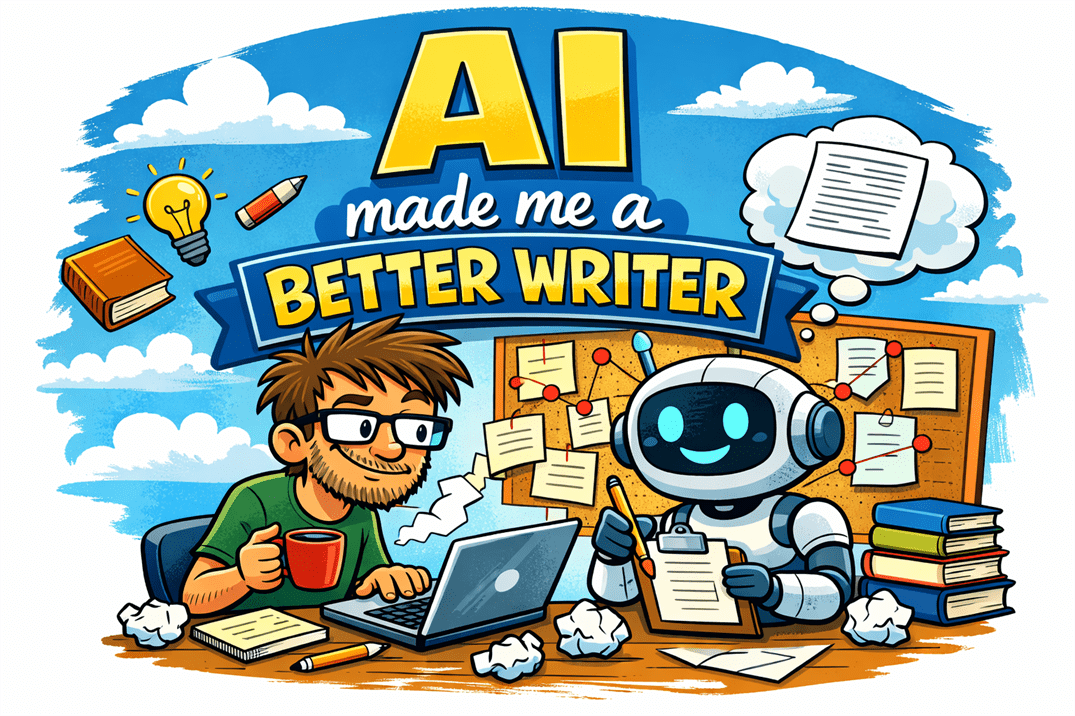
Most of the work I’m doing now lives in the editing layer.
People bring me AI drafts and say, “It’s fine, but something’s off.” That “off” is doing a lot of heavy lifting.
What they’re really saying is:
- It sounds generic.
- It doesn’t quite feel like us.
- It’s technically correct but not persuasive.
- It fills space without building momentum.
Editing in 2026 isn’t proofreading commas. It’s structural thinking.
- You’re tightening arguments so they actually hold up.
- You’re removing repetition that crept in because the model defaulted to safe patterns.
- You’re injecting specificity so the piece feels lived-in rather than assembled.
- You’re adjusting tone so the brand sounds confident instead of vaguely enthusiastic.
AI can generate patterns at speed but it doesn’t have taste, it doesn’t notice when a paragraph drags or sense when a claim needs grounding because trust is wobbling.
That’s the part editors bring.
And that part is suddenly in high demand.
I’ve never been busier and that’s not an accident
Let me say this clearly without turning it into a victory lap.
I have never been busier.
Not because I’m fighting AI. Because everyone is using it.
Founders are drafting thought leadership. Marketing teams are producing landing pages. Creators are building newsletters faster than ever.
Then they step back and realise everything reads… fine.
Fine is comfortable. It’s safe. It’s publishable. It also doesn’t make the grade.
So they call someone who can turn “fine” into sharp, coherent, strategically aligned writing.
That’s the shift.
This isn’t about being better than anyone. It’s about operating at a different layer.
If you can see structure, positioning and narrative flow, you’re not being replaced. You’re being invited into a more interesting part of the process.
This isn’t elitism
I want to be careful here because this can sound like gatekeeping. It’s not.
AI is a powerful tool. If you’re earlier in your writing journey, it’s like having a tireless practice partner.
You can analyse its structure, improve its drafts, learn pacing and flow by dissecting what it produces.
But at some point, your value shifts from “I can produce content” to “I can produce results.”
That’s a different skill.
Think about writers you admire. Joan Didion didn’t stand out because she typed quickly. David Ogilvy wasn’t celebrated for word count.
Their strength was perception. They noticed what mattered and stripped away what didn’t.
That’s the muscle worth building.
Speed was never the end goal
We went through a long stretch where output was king. Post daily. Publish relentlessly. Ship faster than everyone else.
I’ve done it. You’ve probably done it. We’ve all had a phase where we equated motion with progress.
But authority compounds through coherence.
When your ideas connect. When your tone feels consistent. When readers sense you’ve thought carefully about what you’re saying rather than pushing it out to hit a schedule.
AI is fantastic at increasing volume. Humans are still better at shaping meaning.
And meaning is what builds trust.
Where this leaves you
If you’re serious about staying valuable as a writer or content strategist, the focus shifts.
- Develop your editing eye.
- Study structure as much as sentences.
- Pay attention to positioning and reader psychology.
- Rewrite your own work until it feels intentional rather than just complete.
- Get comfortable cutting good lines in service of stronger ones.
The opportunity now isn’t in racing to produce more. It’s in refining what matters.
Here’s the part I genuinely find encouraging.
As AI-generated content becomes more common, audiences become more sensitive to what feels thoughtful.
They respond to writing that has shape, conviction and a clear point of view.
They don’t want noise. They want someone who sounds like they’ve wrestled with the idea for a minute before presenting it.
And if you care about craft, if you obsess over flow, if you feel mildly annoyed when a paragraph is technically fine but emotionally flat, you’re in a strong position.
Now, if you’ll excuse me, I’m going to cut 250 words from something I was very proud of yesterday.