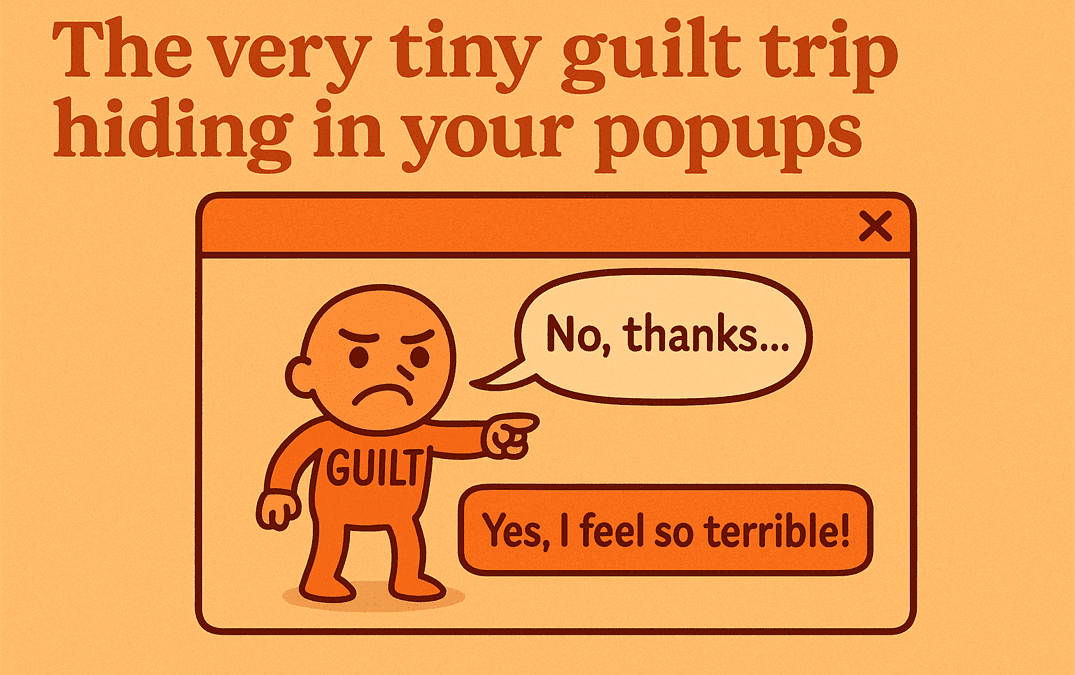
The very tiny guilt trip hiding in your popups
I sat down to write a serious piece about confirmshaming, but then my brain did that thing where it wandered off and started remembering every pop up that ever made me feel like a terrible human.
You know the ones. You go to close a discount offer and instead of a polite “No thanks” you’re faced with “No, I prefer wasting money.”
Nothing like a quick identity crisis before your morning coffee.
Anyway, confirmshaming is the internet’s version of those kids at school who guilt tripped you into giving them your last Rolo.
It’s small, it’s sneaky and it’s somehow everywhere, hiding inside popups like it’s auditioning for a role in a detective novel.
“Ah yes, the case of the Morally Inferior Shopper who clicked the wrong button.”
Let me slow down before this turns into a conspiracy thriller.
Confirmshaming in action
At its core, confirmshaming is just manipulative copywriting masquerading as quirky fun.
A brand offers you a discount, you decline it and instead of accepting your totally normal human decision, the site replies with something like “No, I don’t care about my health.”
Excuse me sir, I came here for vitamins, not emotional critique.
And if you’ve ever clicked one of those buttons with a sigh, don’t worry. So have I. This is a judgement free zone.
The only thing we judge here is poorly written UX, which is practically a public service at this point.
The trick behind confirmshaming is that it targets a moment so tiny you barely notice it.
A micro decision. That split second where you decide whether you want ten percent off your socks or whether you’d rather get on with your day.
Marketers saw that vulnerable moment and thought, yes, let’s turn that into a morality quiz.
Because nothing builds brand love like implying your customers enjoy overpaying.
Is it worth annoying your visitors?
Here’s the kicker. It actually works sometimes.
Humans hate feeling like the villain in their own story, even if the story is just about whether they want another popup.
But that doesn’t mean we have to like the tactic. Or use it. Or pretend it’s clever.
If you’re writing copy yourself, consider this your friendly nudge to keep your opt out text human and respectful.
You don’t need to guilt trip people into caring.
Just offer the discount, add a normal option to decline and trust your audience to make choices without being bullied by a button.
And if you’re still tempted to write something like “No, I love paying full price,” maybe step away from the keyboard, take a breath and remember that your users are tired.
They’ve fought twelve cookie banners and three notifications before even getting to your popup. Give them a little kindness.